Your AI team
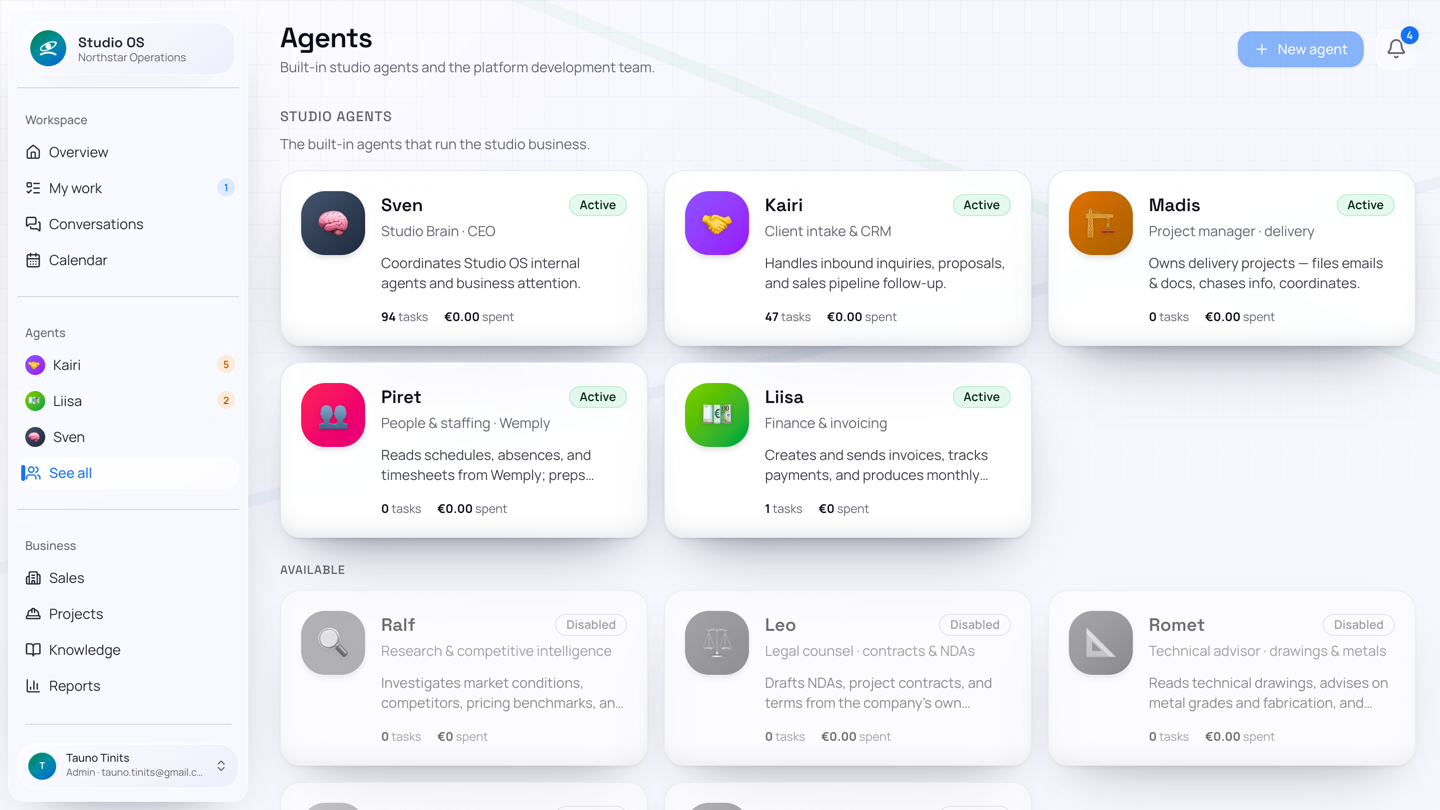
Studio OS is a roster of specialists rather than one assistant with unlimited scope. Each agent has its own tools, context, rules, and activity record. The roster is selected per company, so your workspace may show only the specialists relevant to your business.
Sven — company brain and coordinator

Sven holds the company-wide view. Sven combines pipeline, projects, finance, risks, objectives, and recent activity into a board report, and can answer questions in chat using the same operating context. Sven delegates work but does not replace the domain specialists.
Kairi — client intake and sales

Kairi owns the client and deal flow. She handles relevant inbound inquiries, maintains client state, opens and qualifies deals, prepares clarification replies, proposals and quotes, and raises a win confirmation when a customer accepts a sent proposal. Outbound drafts wait for review.
Madis — project delivery

Madis takes over when a non-event deal is won. He receives a frozen sales-to-delivery brief, keeps project facts current, plans phases and tasks, files project email and documents, requests research, and prepares project replies through the shared draft outbox. He can record a human assignee on a task and track the dependency.
Liisa — finance and invoicing

Liisa is a deterministic finance specialist: she prepares invoice drafts, posts an approved invoice to the connected accounting system, downloads the official PDF, synchronises payment state, and scans for overdue invoices or stale approvals. Posting and delivery use explicit review gates.
Ralf — research

Ralf researches markets, competitors, pricing, technologies, and public tenders. He returns sourced reports and can prepare them for the knowledge base through the appropriate review flow. Optional scheduled tender monitoring can be enabled in agent settings.
Piret — people and staffing

Where Wemply is connected, Piret can read people, schedules, absences, and timesheets. Piret is currently a chat-and-read specialist; automatic coverage watching and payroll handoff are shown as coming-soon capabilities, not background work you should assume is already happening.
Leo — legal
Leo drafts and reviews NDAs, project contracts, and terms using the company's own templates and knowledge. He flags clauses and risks before anything is signed. Contract renewal monitoring remains a coming-soon capability.
Romet — technical advice
Romet reads project documents, inspects supported technical drawings and records technical reviews, material comparisons and fabrication notes. He flags missing information and decisions for review and files his findings with the project.
Tõnis — marketing
Tõnis prepares Mautic campaigns for defined audiences, reads campaign results and recipient engagement, and works with Kairi on sales follow-up. With LinkedIn connected, he reads company Page posts and comments and prepares posts or replies for approval. Campaign sending and LinkedIn publication use their approval flows.
How work passes between them
- The email router first identifies the client, then checks whether the message belongs to one of that client's live projects. Sales mail stays with Kairi; actionable project mail reaches Madis.
- A confirmed won deal creates one project, stores the handoff brief as project context and a document, and wakes Madis.
- Madis can ask Ralf for research and Liisa for finance work.
- Sven reads across the operating state and surfaces the few decisions or risks that need attention.
Every enabled agent has an Agent page with its overview, conversation, configuration, skills, and relevant work surfaces. If an agent or integration is disabled, the platform should be read as a smaller team—not as a promise that every capability above is active.
For specific tools and example requests, use Features & agent tools. The Responsibilities, Workflows and Skills comparison explains the current agent controls, including the shared workflow editor under Instructions.